
Ten Lessons from Ten Years of Talking About Money
15 Nov, 2026
Jonny and I have just returned from KiwiFI, New Zealand's first personal finance conference. Two days of fantastic speakers, a real sense of community, and plenty of good kōrero. It was fantastic!
More than 150 people managed to get tickets, and I was lucky enough to be one of the speakers. The response to my talk was really lovely, so I thought I'd share it with you here on the blog.
I was the only Kiwi among the main guest speakers, with the others travelling from overseas. They included Alan and Katie Donegan (Rebel Finance School), Jackie Cummings Koski (Catching Up to FI, F.I.R.E. For Dummies), Bill Yount (Catching Up to FI), Grumpus Maximus, and Jillian Johnsrud (Retire Often). We also heard from the event sponsors, PocketSmith, Smart and InvestNow.
So, consider yourself part of the KiwiFI audience. Grab a coffee, settle in, and enjoy.
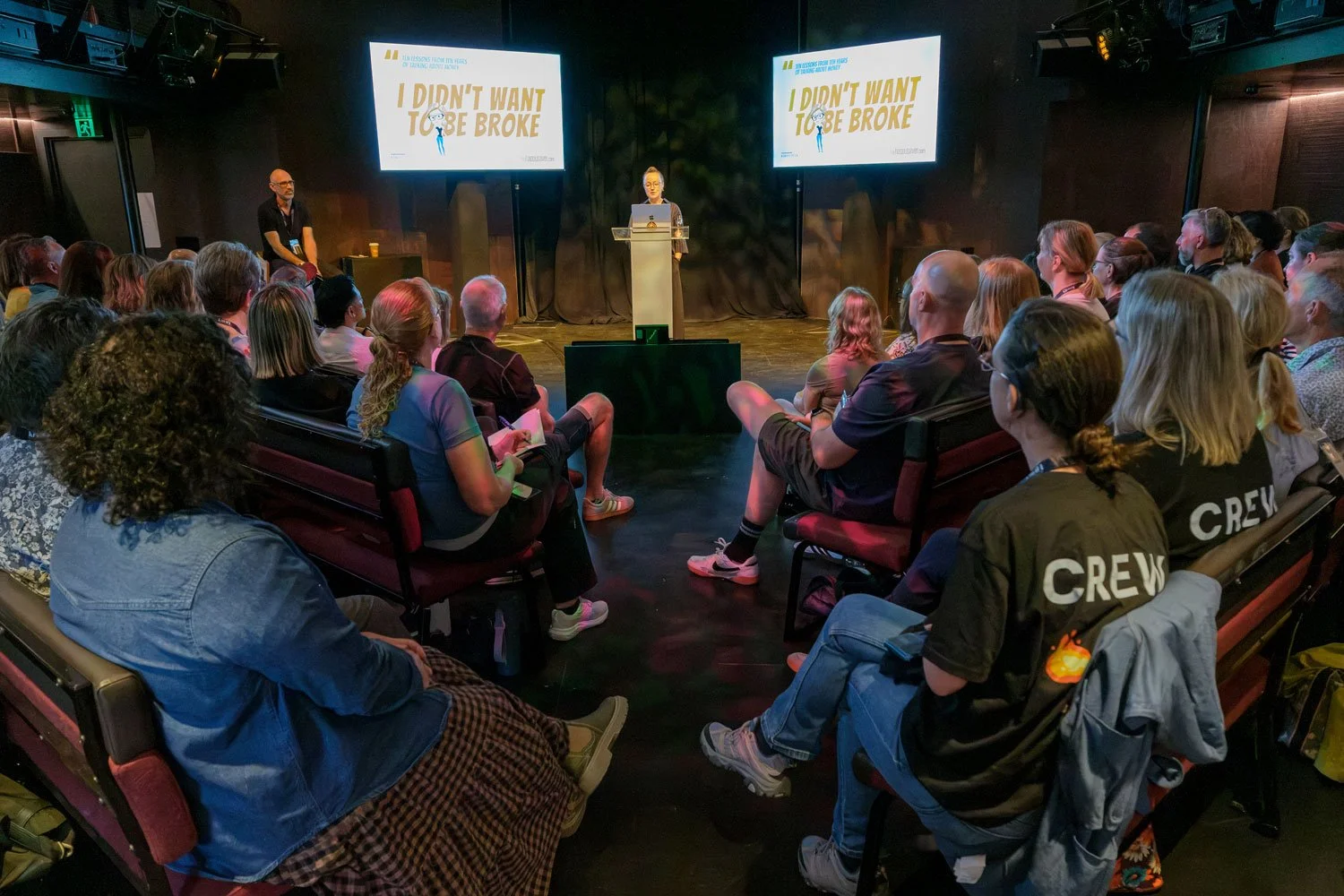
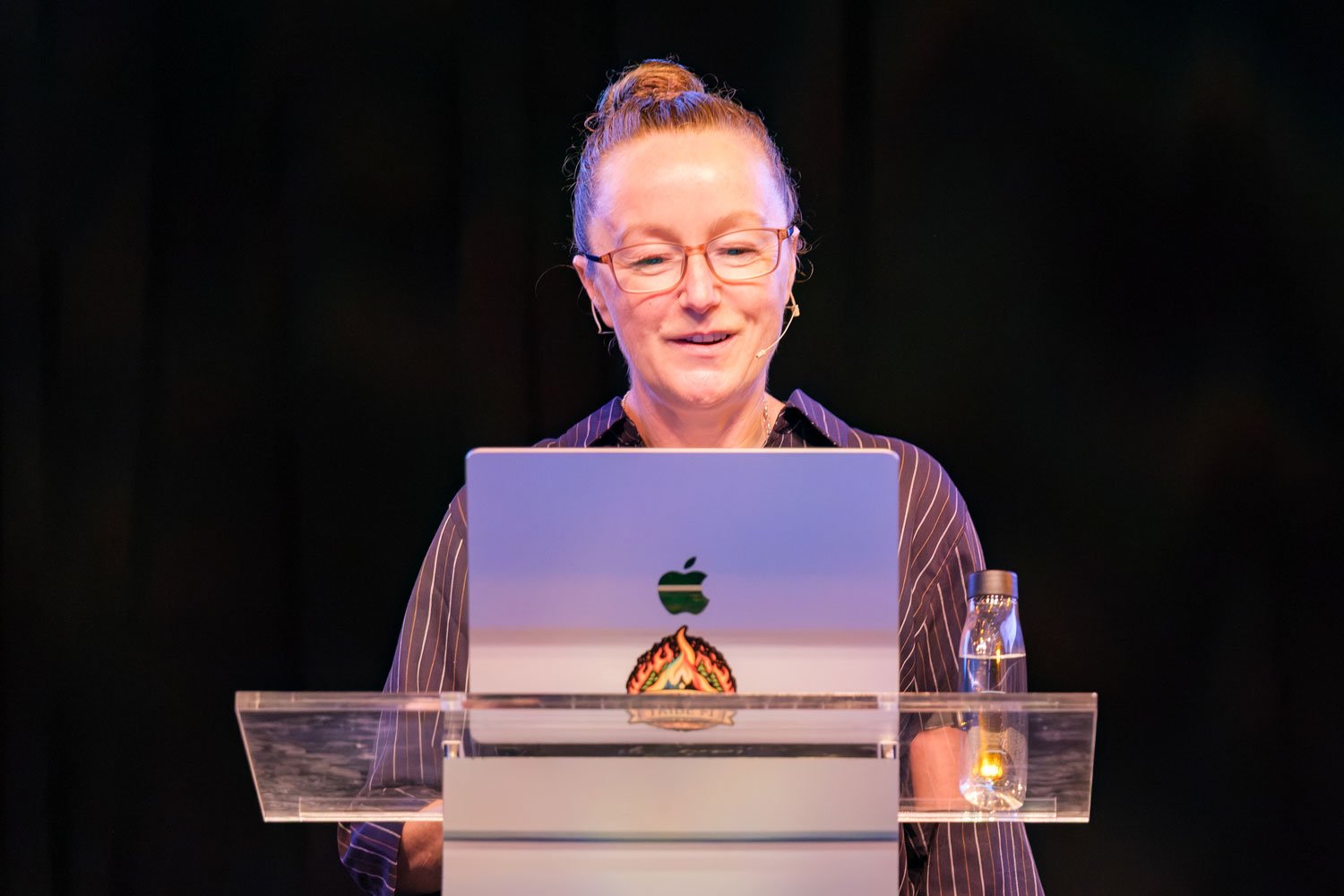
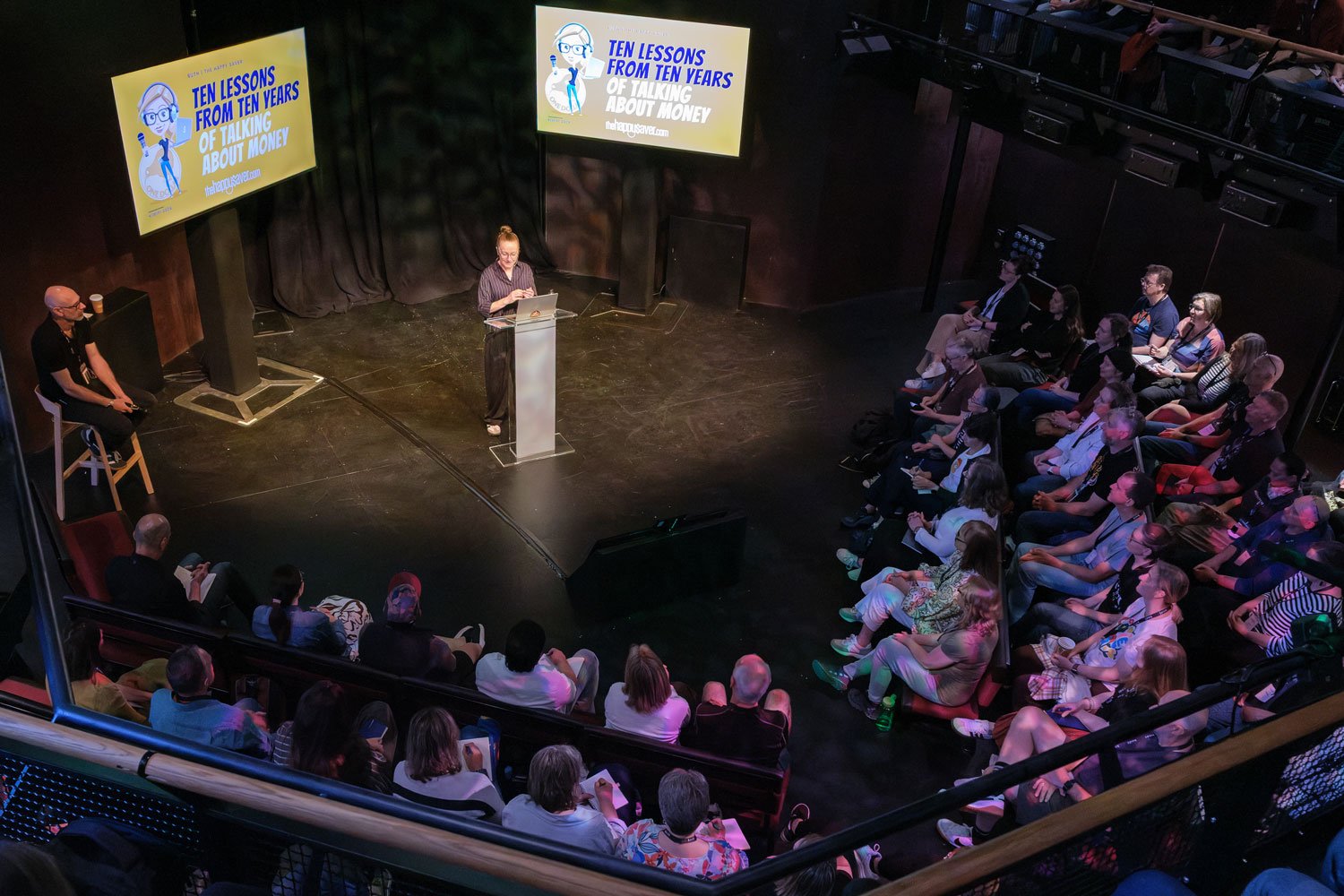
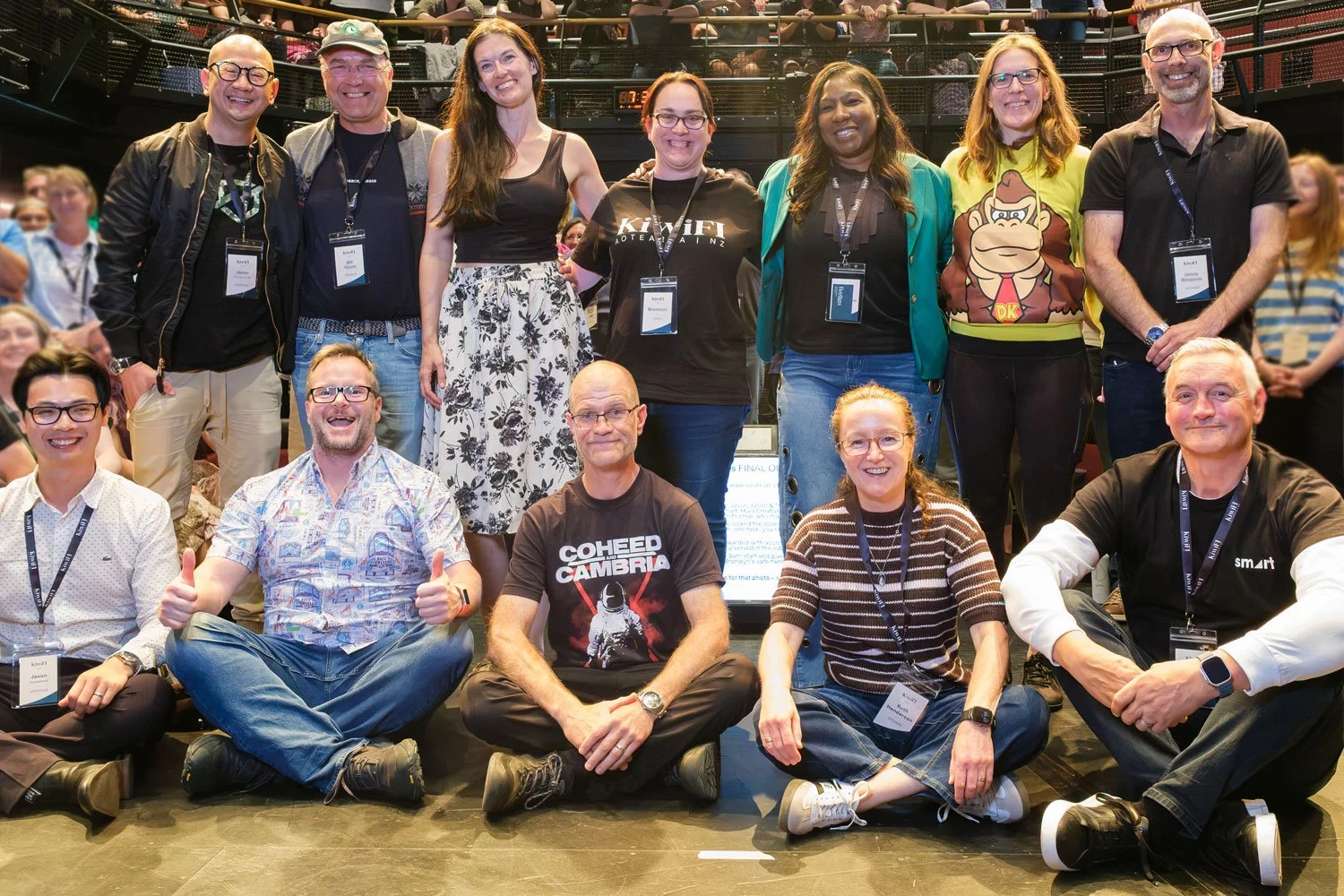
Photo credit: Kelly Haybittle, KBNZ Photography
Ten Lessons from Ten Years of Talking About Money
It's been ten years of The Happy Saver, and I’m often asked for ONE top tip about money. I can do better than that - here are ten lessons I’ve learned from talking about money for ten years.
At a recent FI meet-up at our home in Alexandra, a woman called Megan (and before you start to panic, all names have been changed), told us she'd just discovered financial independence and was trying to get everyone in her hometown of Milton, of all places, as excited about money as she suddenly was.
And I loved her enthusiasm. When you stumble across something that genuinely changes how you see your future, of course you want to drag everyone you know along for the ride.
But Megan was also learning something that I think every one of us eventually discovers: you can't make someone interested in their money. You can share what you've learned, point them to useful information, and show them what's possible, but ultimately, they have to want to do something about it themselves.
Now, I couldn't tell you exactly when MY fascination with our personal finances took hold. Put simply, I didn't want to be broke, and that pushed me to learn. The clearest starting point I can recall was asking my bank what fees it charged on an investment fund it was selling, and being told it didn't have to tell me. That seemed like a pretty peculiar answer to a perfectly reasonable question, and my spidery sense that I was being taken for a ride kicked in.
I never did get an answer about those ANZ fees, but they did me a huge favour because once I started pulling on that thread, the whole financial jumper began to unravel.
Back in the 2010s, almost all the financial information I found came from America: Dave Ramsey, Mr. Money Mustache, ChooseFI, and JL Collins. And I also found The Barefoot Investor in Australia. I discovered an entire alternate universe hiding in plain sight. And I immediately started hunting for the New Zealand version, especially information about investing in something other than houses, and soon my curiosity spread to every corner of our finances.
I see that same discovery in my inbox every single week, or when someone like Megan shows up at a meet-up. Someone suddenly thinks, “Hang on a minute. Why didn't I know this or that about my money?” Sometimes the email is one question. Sometimes many. Sometimes it's a story, like one I received from Kim: it started, “Buckle in, Ruth, because I've got a story to tell,” then goes on for a thousand words.
I love those emails and discussions because I haven't forgotten what those breakthroughs felt like for Jonny and I: understanding what we really earned and spent, paying off the mortgage, discovering a decent ETF in Aotearoa, reaching our first $100,000 invested, and, more recently, nearing a million dollars invested, and reaching Coast FI.
Every time someone shares their own milestone with me, I get to celebrate that feeling all over again.
When I published the first Happy Saver blog post about KiwiSaver ten years ago, I had no idea my curiosity about our money would spark conversations with thousands of Kiwis about theirs. These days, people often pop in for a coffee at my whare to talk about it. Laptops come out, my finance books get borrowed, people get excited to chat, and if the conversation goes on long enough, Jonny might even serve up his excellent Indian curry.
Non-FI muggles still tell me that talking so openly about money is rude. Well, it's a bit late to stop me now. Ten years of talking about our pūtea has taught me a lot, mostly from people like you. What I can share is what we've done, what I've seen others do, and what I've learned along the way about building a good life of our own, while helping and watching other people build theirs.
And the first lesson is where that whole journey began for me.

Lesson 1: Pay attention - that is where everything begins
You and I like to know where our money goes, and that it's behaving itself.
When Jonny and I first started looking seriously at our money, my vibe (shout out to The Castle), which has actually turned out to be quite a useful financial tool, was that we had money left over each month. But I wasn't entirely sure. So I read the bank statements, did some basic maths and worked out what we were earning and spending. And then I just kept going.
I read the fine print and asked providers questions I thought were embarrassingly basic, like, what are your fees? And how much are you making at my expense? Each answer led to another question.
Years ago, Sue from Southland emailed me to ask what she could do with the spare $20 she had each week. Paying attention to that little surplus started something much bigger for her too. One question led to another, and we've corresponded ever since. Her financial life now looks completely different, and far more secure.
What I love about sitting on the sidelines of Sue's financial journey is that she didn't need to know everything at the start. None of us needs to understand everything about money today, but we do have to be willing to see what's actually happening.
I've noticed that once people begin paying attention, they tend to respond in one of two ways:
Some play Pick Up Sticks: they throw their entire financial life into the air and start rebuilding it. Ajith, from Episode 101 of my podcast, was one of these. His wife went overseas and came home to discover her husband had found personal finance, more specifically Dave Ramsay, and gone from YOLO to beans and rice almost overnight.
Others Measure Twice and Cut Once.
Nora from Northland, who I’ve gotten to know well over the years, is one of those people, and I've loved following her steady progress. When we first spoke, she was a bit of a financial mess, but had lots of questions, so I sent her a bunch of resources. She meticulously followed up on every single one, made herself a long to-do list, and methodically worked her way down it.
That list ended up including some enormous decisions. She sold her home and moved to a different part of Aotearoa, and bought a cheaper home for cash. She then began methodically investing in the share market, using ETFs. Every so often I'd hear from her, and she'd tell me where she'd got to, what she'd learned, and what she was doing next. It was steady progress, one carefully considered decision after another.
As you might know, I love updates, and I spoke to Nora recently; she's now fully financially independent. She's reached that rather delicious crossroads where she's deciding whether to do a little part-time work because she'd enjoy it, or not work at all and spend more time with her whānau. And she's so happy. She's delighted she found the FI community in Aotearoa and discovered others who think about money the way she does now.
Can you imagine how nice it is to receive updates from Megan, Sue, Ajith, Nora and so many others like them? Each of them, all in different ways, has created opportunity and choice for themselves. My inbox is full of these journeys, of people who have chosen to pay attention, which is why I love what I do.
Whether you pick up sticks or measure twice and cut once, both ways can work, although one probably leads to a few more arguments with your spouse, particularly if you're married to someone from the other camp!
The point is that neither Ajith, Nora, nor anyone else would have changed anything if they hadn't first noticed something worth changing. And once you've noticed, the next challenge is doing something about it.

Lesson 2: Start before you feel ready
When I started paying attention to our money, there wasn't the big, friendly, helpful FI community there is now to show me the way. I started anyway. And when I launched The Happy Saver, how ready do you think I felt pressing publish on that first blog post?
I had two subscribers: Jonny's mum and my best friend Kim.
That first post was about KiwiSaver. I'd been contributing for nine years, had a balance of about $50,000, and was invested in a fund run by my bank. Through today's lens, I wouldn't choose the same provider or fund. But I'm not annoyed with myself for not knowing more back then. I'm grateful I'd made a start.
Ten years later, my KiwiSaver is around $185,000, with a completely different provider and in a completely different fund. That first blog post wasn't a masterpiece either, but I’d made a start.
I see people delaying their first steps while they research the absolutely best way to take them. They want every question answered before they begin. I get the instinct, but it took me years to refine my budgeting techniques and the way we invest. And the way Jonny and I talk about money has also evolved with us.
The point is: You can learn on the job.
You can start tracking your spending without a perfect budget. You can begin a money conversation without knowing where it will lead. You can investigate a new way of investing without having mastered the entire share market first.
I'm hearing from more and more Kiwis for whom property has been the only investment they've ever known, and who are starting to learn about shares and KiwiSaver. It's unfamiliar territory for them, but they're starting to invest while they learn, asking questions and building confidence on the job.
Starting doesn't mean rushing into something you don't understand. It means refusing to let the search for perfection stop you from doing something useful. Start where you are, keep learning, and - my favourite saying - just keep going.
The next point is that if you're prepared to learn as you go, you also have to be prepared for something else: discovering that a decision you once made no longer suits you.

Lesson 3: You are allowed to change your mind
Would 2016 Ruth agree with everything 2026 Ruth believes about money? I doubt it.
After ten years, my blog is a kind of public diary. You can see us learning, changing our minds, and changing our investments.
We bought gold, partly for the excitement of owning it. We tried credit-card hacking because our American finance friends made it look so very clever and profitable. Before we started The Happy Saver, we even got talked into buying shares in not one but two dodgy start-ups, and we lost the lot. Apparently, one attempt wasn't enough to learn that particular lesson.
Eventually we worked out that gold is fun to show someone at a dinner party, but not for us as an investment. Stock picking doesn’t work for us, and our clever credit-card efforts earned us the grand total of $186 in 2018, along with a magnificent budgeting headache, and that a debit card will suffice.
But we weren't foolish for learning. We would have been foolish to keep doing something that no longer made sense simply because we'd once defended it.
Others I meet face much bigger decisions: leaving a business that's become a money-losing hobby, selling an unwanted, unprofitable rental property, or abandoning a strategy (or a marriage) that just makes them miserable. Changing direction can take years and some very difficult conversations. But the relief can be enormous.
Rose and Adam, from Episode 124 of my podcast, had three rental properties and, eight years in, were financially upside down on them. They began systematically selling and moving on. Rose wrote to me recently and said, “Whatever the obstacles, they are just speed bumps on the road. The direction is clear, and we are moving on”.
Each of us makes our decisions with the information we have at the time. When we learn something new, we can make a different decision. We don't need to beat ourselves up; just fix it and move on.
I used to wonder whether being wrong in public would damage people's trust in me. In fact, explaining why we'd changed our minds helped build it. It also gave other people permission to rethink their own choices.
FI people love creating elaborate plans. So, what financial decision or plan might you still be defending simply because you once made it?
Plans change, because life happens. That brings me to what has carried us through all our changing plans.

Lesson 4: Focus on building the right habits
Jonny and I have never followed an immaculate financial plan. We make life up as we go: We had a child, lived through years of the Canterbury earthquakes, moved towns, quit careers we trained for, and navigated changing incomes to the point that sometimes we had no income at all. Life has been a lot sometimes, both good and bad.
So, I think it's worth asking: what is stronger, your financial plan or your financial habits?
Jonny and I have a direction of travel, of course, but what has helped us most is doing the basics, over and over, and when I meet financially happy people, we all have similar habits. We budget. We track our net worth. We keep an emergency fund, though the amount changes with our circumstances. The vast majority of FI people I meet are 100% debt-free. After spending a week hanging out with the Aussie FIRE crowd at Tribe FI recently, I can tell you we are unique in this. For years, we've regularly put money into ETFs that we hold for the long term.
We don't do everything perfectly, but when life changes, we adjust and carry on.
This year, Jonny and I put those good habits to the test because Jonny left his job in July. It was only two days a week, but it still brought in about $40,000 a year in household income. That is not an amount either of us was prepared to casually wave goodbye to. We were used to earning it, and we didn't make the decision to give it up in one conversation.
Dave Ramsey talks about moving the boat close to the dock before you make the jump, and that is exactly what we did. For years, our good financial habits quietly moved our financial boat closer to that dock. We watched our spending and our net worth, built investments, maintained an emergency fund, and paid attention to what we actually needed to live on, rather than guessing. Each small decision narrowed the gap a bit. By the time Jonny wanted to finish work, the numbers showed us we were financially strong enough to let that income go.
And then we had to do something surprisingly difficult for people in the FI community: trust our math. We'd checked the numbers and talked it through. We knew life wouldn't go perfectly, and if something changed, we could earn more, spend less or do a bit of both. But we didn't have to keep collecting a salary simply because we were used to it.
That decision was a payoff from years of good habits. There was no clever trick behind it.
I've seen the same thing with people who are both financially comfortable and happy. They don't necessarily have complicated systems, and they certainly don't all make the same decisions we do. They have a few habits that suit them, and they return to those habits when life throws something unexpected their way.
The habit stays yours, even when the plan changes.
A good financial life isn't one where nothing goes wrong. It's one where, when something does go wrong, you know how to find your feet again. 2026 has been a year of Jonny finding his feet again. More on that shortly.
And there's something quite reassuring about the fact that, once you've built those habits, a lot of money management becomes rather uneventful.

Lesson 5: Boring works
I'm very pleased that there are events like KiwiFI to entertain us all, because it's far more enjoyable than trying to make investing itself entertaining.
I've mentioned that we bought gold for fun. These days, I look for fun elsewhere. Our ETF and KiwiSaver investments have a very important job: they're helping us build a nest egg and more options for our future.
Entertaining me is not part of their job description.
So, when someone tells me they're “having a play” on an investing app, I tend to ask a few questions. Sometimes I see a phone full of individual investments, and I ask how they're doing and, out of interest, ask why they bought each one. Quite often there are a few winners and a long list of things the person would rather not talk about. So, I'll ask, “Are you having fun yet?”
It turns out losing money while you're ‘having a play’ isn't necessarily much fun.
Every new investment product or provider is marketed to feel urgent and exciting. But for Jonny and I, the useful bit is doing something repeatable, unemotional and, frankly, boring. Stumbling upon JL Collins all those years ago thankfully set us on the right path. Our first ETF purchase WAS exciting. By the hundredth, it was more of a 'meh'. That's exactly how I like it.
Now, the results can be thrilling. Watching those investments grow and seeing how they change what's possible in our lives has been wonderful. But I don't need every transaction to give me an adrenaline rush.
And when the share market wobbles and the financial headlines do their best to freak us out, we don't have to find some clever new thing to do. We can just get on with our day or, in my case, head out for a trail run in the Central Otago hills. If you've got something more fun planned, invite me along!
'Be boring' is never going to be a glamorous investment headline. But boring, consistent investing has helped us build a very interesting life.
There's another part of our financial life that outsiders might find just as unexciting, yet it's probably given us more freedom than almost anything else we've done.

Lesson 6: Paying off debt changes more than the numbers
Now, you don't hear much from Jonny, but there is one money topic he gets very animated about: getting out of debt. He's convinced that if people understood how free you feel when you don't owe anybody anything, they'd line up to do it.
No mortgage, no student loan (interest-free or otherwise), no car loan, no credit-card balance, no need to give a moment's thought to lending interest rates. You get the picture.
The maths of debt is clinical: you owe $1,000, pay $50 a week, and twenty weeks later it's gone. But it's more complicated than that. If you're still paying for something you regret buying, or even if you don’t, every payment reminds you of that decision.
And once you enter the world of FI and keep hearing the words ‘Opportunity Cost’, you often regret those past purchases even more. What else could that money have bought you? An asset that buys your freedom, perhaps?
Paying off consumer debt can feel like throwing off shackles. Last week I got an email from William from Wellington, a 23-year-old who had just paid off his $60,000 student loan. He said, “The freedom I now feel is invaluable.” He also said the habits and discipline he learned are skills he is taking with him.
Paying off a mortgage can feel different. It's a little like serving a very long custodial sentence and suddenly being released back into the community. You've spent years concentrating on one enormous goal, and then, one day, it's done. What now?
Many people email me when they have made their last payment, and I applaud each of you.
Some people spend decades buying, renovating, remortgaging, and paying down debt, only to reach a mortgage-free life, house-rich but cash- and investment-poor. They've climbed one mountain only to discover another behind it.
So I think it's important to ask what debt is actually costing you, and I don't mean only the interest. Who gets a vote in your big life decisions: you or your lender? What might become possible if those repayments simply disappeared?
Jonny and I became debt-free almost twenty years ago, when we paid off our Christchurch house, a house that we lost in the Canterbury earthquakes, but still, paying it off remains one of our best financial decisions. It took years of deliberate effort to get there, though. And ever since, we've had to make the deliberate decision to stay out of debt. Being debt-free has become a habit.
At first, we blew a fair amount of that freed-up income on cars, travel and house renovations. But as I discovered FI, that extra cash flow helped us begin regularly investing about 35% of our annual income. Being free of debt gave us room to make different choices, and over the years those choices built on one another.
I love to receive two particular kinds of email.
The first comes from someone who's had enough of debt after twenty or thirty years of making payments. They come up with a plan to pay it off over another five or ten years. I always ask whether they've explored what a shorter timeframe might look like, and they quickly tell me I've got rocks in my head. But a few years later, I get an update. They've done it!
The second kind arrives on the day someone makes their final payment. I get a screenshot of a zero balance, or a photo of a person looking pretty darn pleased with life. I'm just as excited as they are, because I remember that feeling I got when we paid off our own home. I know I’ve sent a congratulatory email, in the largest font I can find, to a fair few readers of The Happy Saver.
Although sometimes they add onto their email, “Is that it? I thought there'd be more of a congratulatory response from their lender.”
Well, don't expect the bank to throw you a party. They're probably in the back office crying at having lost your business.
But give it a month or two. Because the biggest benefit isn't the final payment itself. It's the moment you notice that the money which used to disappear every fortnight is now staying with you. Along with that comes less paperwork, less juggling of rates and dates, and less financial noise.
Everyone's circumstances are different, and I know becoming debt-free is neither quick nor easy, particularly when the cost of everyday life is biting so hard. All I can tell you is what being debt-free has meant to us, and why we've made the effort to remain that way. One of the biggest benefits has been the enormous relief of not having a lender waiting for our next payment when something else goes wrong.
And this year, something went very wrong.
In March, Jonny fell off a ladder. He broke his pelvis, broke his wrist, and then a couple of months later, fainted, fractured a vertebra and gave himself a concussion. Both were horrible accidents, and his recovery has taken a long time. I'm generally pretty calm in a crisis, and from the moment it happened, our jobs were very clear. His was to lie still, and mine was to do everything else.
Whatever we had been doing got put to the side as we focused on his recovery month after month.
Very quickly, we understood something else.
Money wasn't going to be another problem we had to solve on top of everything else. We already had a full emergency fund. I'd stopped doing my part-time job in 2024, and Jonny had been working just two days a week and was preparing to finish. We already had a lot of autonomy over our time. We didn't have any debt to service, and neither of us had a schedule that meant we absolutely had to be somewhere else when what we needed was to be right where we were.
A healthy bank balance doesn't make an accident less frightening or a fractured pelvis less painful. But there's a world of difference between handling a crisis and handling it while worrying about how to pay the bills. All that quiet financial mahi done over the last two decades meant we could concentrate on what mattered: getting Jonny, quite literally, back on his feet.
We're a very good team. Our jobs change depending on what's happening, but we're working toward the same things, both financially and personally. Some changes you choose, like Jonny leaving his job. Others arrive without asking permission, but our good habits gave us room to deal with both.
And this is why I talk so much about freedom, and why I love what Alan and Katie Donegan from Rebel Finance School do. The aim isn't simply to reach a particular investment balance. It's to create space in your life to make decisions for yourself, and sometimes to get through circumstances you would never have chosen.
But I've also learned that sometimes the biggest obstacle to making those decisions isn't a bank or an interest rate. It's what we've been telling ourselves about our own abilities.

Lesson 7: You are better with money than you think
Too many conversations with women begin with the same sentence: “Ruth, I'm terrible with money.”
And here's an interesting thing. In ten years of talking to people about their finances, I can't recall a single man starting a conversation that way.
There's a quote I love: “I wish brilliant women had the confidence of mediocre men.” And when I hear a woman dismiss herself as hopeless with money, I want to ask her what else she manages in her life.
My first impression of a person is always that you are brilliant, until you prove me otherwise.
She might work, run a business, manage a family, solve problems, and keep an impossibly long list of things moving. Those are the skills of a capable person.
What she might not have done yet is turn those skills towards money. Maybe no one taught her, or someone else always handled it. That doesn't make her bad with money.
I also hear people say, “I was never taught this growing up.”
But we're all grown up now, and we can learn.
So, whatever your question about money, you just start with that. You don't have to do everything by Friday at five. But you can do something, and then another thing, and gradually change the story you're telling yourself.
This is one of my favourite things about Rebel Finance School's use of the word yet. “I'm not good at money” becomes “I haven't learned to manage this part of my money YET.” It's a small change in language, but it's an enormous change in what you believe is possible.
When I was writing this, I was also emailing a woman who'd listened to my podcast and started taking a proper look at her family's finances. Over the course of our correspondence over a number of weeks, I felt her confidence grow through her emails. Her uncertain and hesitant questions became clear ideas, and before long there were exclamation marks everywhere. She was going for it!
Not knowing something is not the same as being bad at it. Please don't turn a knowledge gap into a judgement about your character. You're more capable than you think!
Of course, once you start building that knowledge and confidence, you may find yourself in Megan's from Milton’s position, bursting to share it with everyone else. That's when we have another responsibility, and this is my eighth lesson: remembering what it felt like not to know how money works.

Lesson 8: Remember what it felt like not to know
People sometimes ask why I spend so much time answering emails. “Couldn't you just have a few standard replies, Ruth?”
Ah, no. Firstly, I answer because I enjoy it, and secondly, because behind each question is an actual person, with a life that is rarely as simple as the question makes it sound. It’s never just about money. And I’m old school. If someone has taken the time to contact me, it would be rude not to respond.
Recently I had a 21-year-old at my kitchen table who wanted to know 'all about money'. I told him, “Come at me with your questions.” Any questions! I've spoken with a 59-year-old trying to think through whether to take on more mortgage debt or get rid of it entirely, and I've heard from an 80-year-old who wants a greater say in managing her money rather than leaving every decision to her husband.
The reason I specifically mention ages is that everyone comes to wanting to understand money at different stages of their lives.
They didn't come to me expecting a lecture or a product to buy. Or even a solution. They wanted someone who was interested, who would listen, and who would help them think. Often what helps most is another perspective and a pointer towards information they can explore themselves.
And here's probably the thing that's surprised me most after ten years of talking about money: investing turns out to be only a small part of what someone is trying to sort out.
People might start by asking about one area, but a much bigger story unfolds. That was the case for Sue from Southland. Money sits inside a life, with partners, children, jobs, and relationships.
It has taught me that knowing the maths is important, but it's not the whole of personal finance. Emotions, habits, and what we believe about ourselves matter.
Kiwis do want to talk about money, and I find the psychology of personal finance endlessly fascinating.
There are more ways to learn now than ever: books, podcasts, free courses, online resources (including AI), and conversations with people in communities like this one. The tools are there, and so is our own capacity to think, learn, and decide for ourselves.
All those years ago, I remember wishing I had someone to yarn with about my questions. Now, because of the large Happy Saver community, I get to see people's progress, sometimes from day one to an email saying they've reached their FI number, all under their own steam. Good for them!
But the point here is that you already know more about money than you realise, and your knowledge can make a real difference to someone else. Just remember that what seems obvious to you now may be utterly unfamiliar to them.
When someone asks a question, you don't need to tell them everything you've learned in the past ten years. You certainly don't need to take over their financial life. Answer the question they actually asked, and invite them to come back when the next question occurs to them. The aim is for them to become more confident in their thinking, not more dependent on yours.
It's why I end my podcast asking people “to talk more about money with their own friends and whānau.”
But if we want people to hear us, we have to think not just about what we're saying, but how.

Lesson 9: Teach people in the way they can hear you
Jonny and I are two very different people sharing one financial life. We don’t think about money the same way, or even want to see the same information.
I used to track our spending on a spreadsheet that I laboriously updated by hand. I'd sit Jonny down and try to walk him through it. His eyes would glaze over, and to make matters worse, I'd sometimes start correcting the spreadsheet while I was showing it to him. It's painful being trapped beside someone doing that. And I was that person. Sorry, Jonny.
He wasn't uninterested in our finances. He just wasn't interested in my spreadsheet. I was giving him the information in a format that made complete sense to me and very little sense to him.
We eventually found a common language using PocketSmith, and I can still get my perverse thrill from knowing exactly what the trip to Christchurch to attend the conference has cost us, down to the cent, with every transaction neatly categorised. Jonny, meanwhile, just wants to know, “What did the trip cost?”
Years ago, I asked him what information he actually wanted. His list was wonderfully short: What's our net worth? What are we earning and spending this month? How much is in the holiday sinking fund? And, for a long time, one more question: “Can I quit my job yet?”
He left his job in July, so we've answered that one!
The breakthrough wasn't convincing Jonny to think more like me. It was recognising that if I wanted him to be part of the conversation, I had to present our money data in a way he could engage with. He has insights I don't have, and I have insights he doesn't. When we both have a say, we're a much better team.
A local woman recently told me that after four years of trying to talk about money with her husband, something had finally clicked. She had kept presenting the same information, in different ways, until it resonated. I love that she never stopped trying. And to his credit, he never stopped wanting to understand. After years of pulling in different directions, they are finally rowing their waka together.
And you can't rush that by delivering a brilliant twenty-minute lecture to someone who hasn't asked for one.
Readers of The Happy Saver know that I've spent years working on my delivery to our daughter, who's now 19. She's independent, knows her own mind and doesn't particularly want her mother launching into an impromptu personal finance seminar.
So these days I might say to her, “Beautiful daughter, it's Sunday, and I want to talk with you about the cost of university next year. It'll take five minutes. Please come and see me before Friday at five, at a time that suits you - but not at ten o'clock at night.” Then I walk away.
And I do my homework. I work out the point I'm trying to make, frame it in a way she likes to learn, sometimes practise saying it aloud, and when she comes to me, we have a conversation. I listen to her thoughts, we work out what's next, and it's done. No ambush, no hour-long sermon, no spreadsheet, and perhaps just a little eye-rolling from her; she is still very much a teenager, after all.
I do the same with other people. I meet them where they are at, and I encourage you to do the same. If they like videos, I send a clip; if they prefer reading, I share a book, blog or article. If they just want to yarn, as the 21-year-old sat at my kitchen table, we'll yarn. My psychology and management studies helped me develop these communication skills, but mostly I've learned by engaging with a lot of different people.
Remember Ajith, the Pick Up Sticks husband whose wife returned from overseas to find him living on rice and beans? He'd become so excited about what he'd learned that he forgot to bring her along. To his credit, he realised it, listened, and now they're a tight team.
A financial system that only one member of a whānau understands isn't yet much of a family financial system. The goal isn't to prove how much you know. It's to give the other person a chance to understand, contribute and make decisions with you.
And if we can make those conversations part of normal family life, something wonderful happens. The learning doesn't have to stop with us.

Lesson 10: Please teach kids about money
When someone tells me they were never taught about money as a child, I often ask, “Do you have children?” And if they do, my next question is, “So, what are you teaching them about money?”
Sometimes there's a long silence. We don't always make the connection that unless we pass on what we're learning, the next generation will have to start from scratch too.
Anyone who has followed The Happy Saver for a while will know about my greatest social experiment: the financial education of our daughter, who has just completed her first year at the University of Otago.
Our aim was never to create a miniature Ruth who spends her evenings poring over her PocketSmith dashboard. It was to give her confidence that she can manage her own money well, create a gap between what she earns and spends, invest a portion of every dollar earned, ask good questions and recognise a poor financial argument when she hears one.
Above all, we wanted her money to give her choices. The only way she could do that was by learning to manage it herself.
She doesn't love talking about money the way I do, but we've always talked about it at home. In short conversations, every single day, and when it was relevant to something happening in her life, we shared what we knew, let her make decisions, and allowed the learning to build over time.
I'm particularly proud that the daughter who rolls her eyes at my money talk now has friends who notice how competent she is with her money, that she is a successful ETF investor, and they ask her to explain it to them. Much like JL Collins discovered with his daughter Jess, it was going in, even when it didn't look as though she was listening! And I think that's one of the most rewarding things about sharing money knowledge: you don't necessarily see the result straight away. Sometimes it's years later that someone uses what you've shown them, makes a better decision, and then shares it with somebody else.
I don't buy the idea that children have to make financial mistakes to learn. I don’t buy that we have to teach them ‘how to handle debt’. Instead, we have taught her how to handle money. I feel as though we've spared her some of the years Jonny and I spent working things out, and that's a gift I'm very pleased we could give her.
Righto, it's time to wrap this up
When I first started writing about money, I thought that The Happy Saver would be about: earning it, spending it, saving it and investing it. But recently Sam, one of the organisers of KiwiFI, asked me what my 'why' was.
Why am I still blogging and podcasting after a decade?
And my answer is “It's the people.”
I've met Kiwis from Stewart Island to Cape Reinga, and friends around the world. I'm a connector: if I think two people would get along, I'll introduce them, because as we know, FI is better with friends.
The people I meet through The Happy Saver have wildly different backgrounds, incomes, and goals. Some are trying to work out where their money goes each payday; others are deciding whether to book a trip to Antarctica or take a river cruise in Germany. What connects them isn't a particular net worth. It's their interest in building a life that works for them, a commitment to sticking with it for many years, and their delight at meeting others who understand.
Your FI friends are often hiding in plain sight, and I encourage you to go out and find them.
People ahead of me on the path to FI motivate me, and people just starting remind me why sharing matters. But the best part is seeing what they do when money takes up less space in their heads. FI people are fun to be around.
David and Rachel headed to Antarctica, and Bradie and Paul have ticked off a fair few of our Great Walks. Others I have met volunteer, build things, get fit, spend time with whanau, and host personal finance meet-ups in their community. Some of you still work, but enjoy it more because you choose to be there. Others like Nora from Northland have moved to a new part of the country simply because that's where they want to live. I even know people who've written whole albums about personal finance, just because they felt like it!
That's the beautiful thing about FI. There isn't one correct life waiting at the end. New house or old house, new car or old car, campervan or tent, international travel or staycation, keep working or don't - you get to decide what a very good life looks like for you.
Jonny and I have gone a long way off any script we might once have imagined. We've recently reached Coast FI. This year we've had an accident neither of us could have prepared for, and a decision about his work that we'd been preparing for over many years. We were able to say, “Let's look at what's in front of us, work out what matters, and go from there.” That's what all those years of paying attention, building habits, getting out of debt and investing have given us. Not a life without surprises, but more room to deal with whatever comes next.
It's funny that all of this began with a question about bank fees. I thought I was investigating an investment fund, but that grew into The Happy Saver and thousands of conversations.
Which takes me back to Megan in Milton. She's right to be excited, and I hope she keeps sharing what she's learning. But she doesn't have to convince the whole town. All she has to do is keep living her own good life, be willing to talk when someone's curious, and make it easier for the next person to begin.
Before you finish your day today, think of one thing in your own financial life that deserves some attention. Just make a start. I've learned from people like Sue and Nora that extraordinary changes can grow from an ordinary first step. And then, my favourite saying, just keep going!
Acquiring money is not the destination. Money is a tool, and what we're really working towards is more freedom to choose how we spend our time, our energy, and our lives. And along the way, if we're lucky, and I think I’ve been extremely lucky, we meet some pretty wonderful people.
So, you know how this ends, don't you?
I would love it if you would talk more about money with your own friends and whānau and help me continue to help others be better with money.
So, until next time,